
Homeowners searching for “best driveway material,” “driveway paving near me,” and “asphalt vs concrete driveway cost” aren’t just gathering information. They are ready to take action.
The driveway material you choose impacts your property value, curb appeal, and your home’s long-term maintenance.
This guide will cover the three most popular driveway options:
Why Choosing the Right Driveway Material Matters
our driveway is more than a parking spot. A driveway is a critical element of:
- First impressions (curb appeal)
- Property resale value
- Drainage and safety
- Maintenance costs over time
Homeowners notice cracking, fading, and poor drainage, and search for “driveway contractor near me” or “paving companies near me.”
The wrong material could lead to:
- Frequent repairs
- Higher costs in the long run
- Poor performance in extreme weather
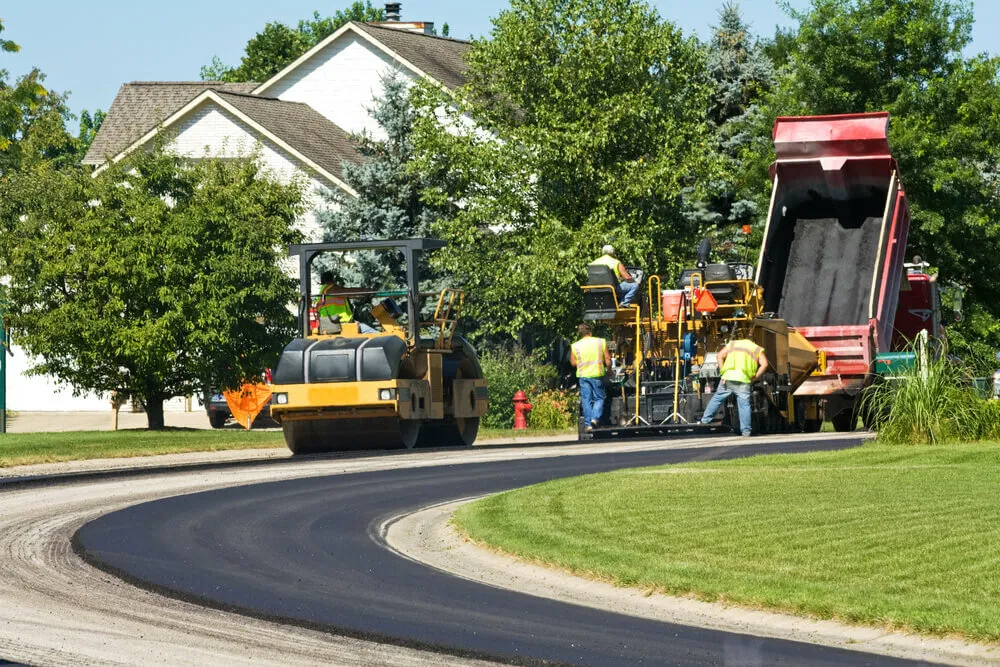
Asphalt Driveways: Affordable & Durable
Asphalt is a popular choice for driveways, especially for colder climates.
Benefits of Asphalt
Initial cost is lower than other materials
Installation is quick (1-2 day)
Surface is flexible and does not crack in cold weather
Repair is easy
Drawbacks
- Requires sealing every 2–3 years
- Can soften in extreme heat
- Limited design options
Best For
- Budget-conscious homeowners
- Cold climate regions
- Quick driveway installation projects
It’s no surprise that a lot of people search online for “asphalt driveway repair near me” when cracks form because this option is so common.
Concrete Driveways: Strong & Long-Lasting
Concrete is one of the most popular options for homeowners because of its long lasting durability and its clean aesthetics.
Benefits of Concrete
- Long lifespan (25–30 years)
- Minimal maintenance
- Clean, modern look
- Can be stamped or decorative
Drawbacks
- Higher upfront cost
- Can crack in freeze-thaw cycles
- Repairs are more noticeable
Best For
- Modern homes
- Warm or moderate climates
- Long-term investment
The high demand for this material is clear with searches for “concrete driveway installation.”
Interlocking Pavers: Premium & Custom Design
Pavers are one of the most visually appealing driveway options and therefore are common in luxury homes.
Benefits of Pavers
- High-end appearance
- Multiple design options (patterns, colors)
- Easy to repair (replace individual stones)
- Excellent drainage
Drawbacks
- Higher installation cost
- Requires professional installation
- Weeds may grow between joints if not maintained
Best For
- Luxury homes
- Custom driveway designs
- High curb appeal projects
The increasing search trends for “block paving contractors near me” and “resin driveway” illustrate the demand for these premium surfaces.
Asphalt vs Concrete vs Pavers: Quick Comparison
| Feature | Asphalt | Concrete | Pavers |
|---|---|---|---|
| Cost | Low | Medium | High |
| Lifespan | 15–20 years | 25–30 years | 30+ years |
| Maintenance | Medium | Low | Medium |
| Design Options | Limited | Moderate | High |
| Repair | Easy | Moderate | Easy |
How to Choose the Best Driveway Material
The driveway material for you depends on a few important things.
You have to think about what you want from your driveway material.
Budget
Asphalt is one of your options if you’re looking for a budget-friendly driveway material.
Asphalt is your material of choice if you’re looking to save.
However, if your priority is longevity, your options will be limited to pavers or concrete.
When considering the longevity of driveway materials, pavers or concrete will be your options.
Climate
When choosing a driveway material, it’s crucial to consider your location.
In colder climates, asphalt is a driveway material of choice.
Asphalt is most suitable for colder climates.
In hotter climates, concrete or pavers are the preferable materials as they can withstand the high temperatures.
Maintenance
You should also consider the level of maintenance you’re willing to do for a particular driveway material.
Concrete is a good choice if you are looking for a driveway material that requires little maintenance.
Concrete is a good choice for a low-maintenance driveway.
If you’re willing to do a bit of maintenance, asphalt or pavers would be the materials to consider.
Appearance
The way your driveway material looks is also important.
If you want your driveway material to look really nice pavers are a choice.
Pavers are the driveway material when you want a ultraexpensive look.
If you want a style for your driveway material concrete is a good choice.
Concrete is the driveway material when you want a ultramodern style, for your driveway material.
What Homeowners Are Searching in 2026
- driveway paving near me
- paving contractors near me
- asphalt driveway cost
- concrete driveway installation
- driveway repair services
Here are some things to think about before you put in a driveway.
Before you hire someone to do the job consider these tips from people who know what they’re doing
Always Check Work of the driveway contractor.
Look at filmland of jobs they did ahead to see how good they’re at erecting a driveway.
Ask About Drainage for your driveway.
If water does n’t drain duly it can beget cracks in your driveway and damage it over time.
Get Multiple quotations from driveway contractors.
Talk to least two or three driveway contractors and compare what they say they will do for your new driveway.
Choose the Right Base Preparation for your driveway.
If the base of your driveway is n’t prepared rightly it’ll not last veritably long.
When you search for commodity, on Google it likes businesses that show filmland of the work they did say easily what services they offer for a new driveway and are located near you for your new driveway.
Final Verdict: Which Driveway Material Is Best?
- Best Budget Option: Asphalt
- Best Long-Term Value: Concrete
- Best Appearance: Pavers
There is no one driveway material that works for everyone. The best driveway material for you depends on how money you have to spend the weather where you live and what you think looks good.
Final Thought
Choosing driveway materials can be tough, but considering a few things can guide you in the right direction.
There are benefits and drawbacks to driveway materials, be it pavers, asphalt, or concrete.
- Consider a few things if you are looking to install or replace a driveway:
- Consider how long the material will last.
- Consider how much maintenance will be required to keep it in good shape.
- Consider hiring a professional to install it.
- Driveways also help to enhance the value of your home.
FAQs
What is the cheapest driveway material?
When it comes to affordability, asphalt really is the clear winner. Out of all the driveway materials, asphalt is the cheapest.
How long does a driveway last?
Driveways have varying lifespans based on the material. Asphalt has a lifespan of about 15 to 20 years. Concrete is better at approximately 20 to 30 years. If maintained, pavers can last over 30 years.
Is asphalt better than concrete?
Asphalt is a choice for colder climates because it can bend and flex. This is really helpful when the weather gets cold. On the hand concrete is very strong and does not need to be fixed as often. When you are trying to decide between asphalt and concrete you need to think about how money you have what the weather is like where you live and what you want to happen in the long run. Asphalt and concrete are two different things and the best option for you will depend on your budget, the climate and your long-term goals, with asphalt and concrete.
Do pavers increase home value?
Interlocking pavers can really make a difference in how good your house looks from the outside. This is because interlocking pavers can improve what people see when they drive up, to your house. Interlocking pavers can also give you a nice driveway that will last for a very long time.. That is something that people who might want to buy your house will really like about interlocking pavers. Interlocking pavers can make your house look so good that it will be more valuable.
How much does driveway paving cost?
Driveway paving costs vary based on material and size. On average, asphalt costs $3–$7 per square foot, concrete costs $6–$12, and pavers range from $10–$25 per square foot.